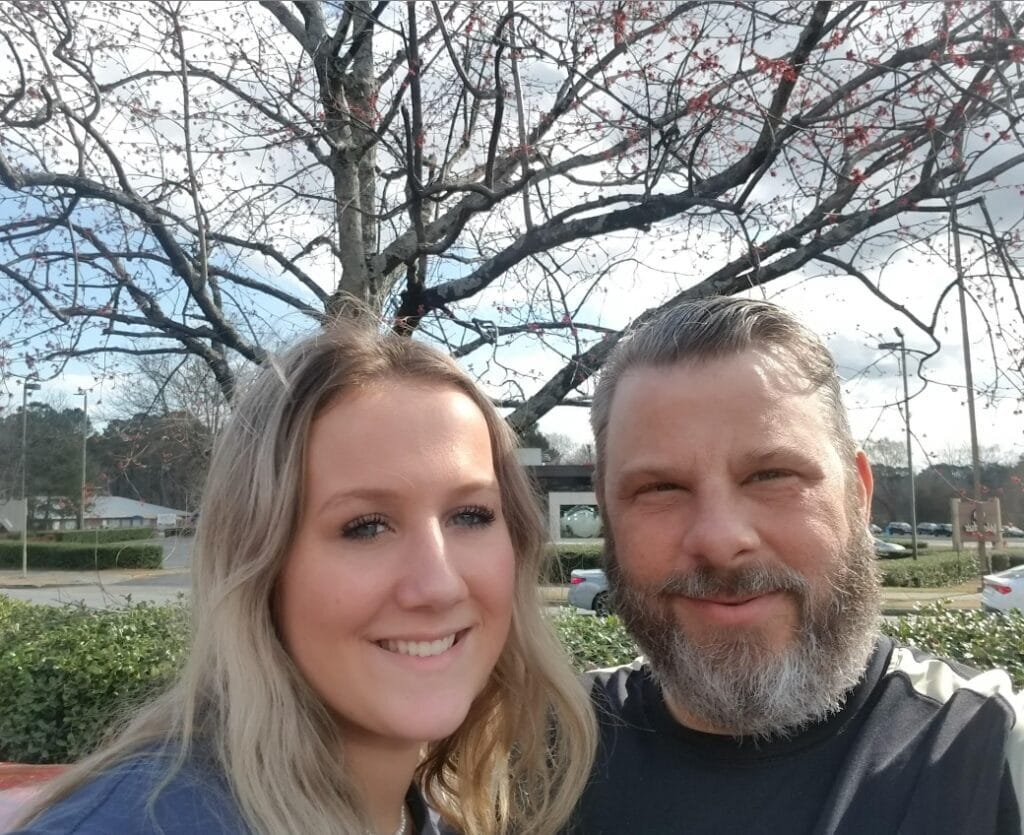
David’s Story of Hope
I had 6 years clean and sober, and then I turned seven years old and had my first drink. I started to drink heavily in high school and got into hard drugs in my 30s. In 2019 I spent a few months in Cherokee County Adult Detention Center and it was there that I heard about this place called The Extension. I was accepted into the program and was told there was a bed available waiting for me when I got out.
I was released on the Friday of Labor Day weekend and walked all 19 miles from Cherokee County down to Church Street Extension. When I got there I found that everyone had already left for the long weekend so I had to sleep in the Wal-Mart parking lot until Tuesday morning when staff got back.
My counselor at the time was Tony Stanley, and he’s been a huge part of my recovery. He taught me things about my addiction that I never would’ve known. He inspired me to stay in recovery and planted the seeds that eventually lead me to come back to work here. When I graduated in 2020, due to COVID restrictions, I didn’t get to have a transition ceremony and campus was closed to the public. I didn’t get the chance to come back until 2021 when restrictions were loosened. That’s when I started to think about working here, but there were a lot of hurdles I had to jump through. At the time I hadn’t gotten any clinical certifications so I didn’t think I was qualified, but our Director of Administration, Stephanie Glover really inspired me to push through and go for it, which I’m incredibly grateful for.
I started as a part time Resident Technician and pretty soon after I was a full time RT. I loved that position because I didn’t have any interest in the clinical side of recovery at the time. But while I was working that job I ended up learning a lot from our Program Director at the time, Trish. She pulled the curtain back and I learned what it meant to meet our clients where they are.
That has been one of my biggest lessons so far. We’re all here for the same reason, but my story isn’t their story. You know, I have trauma and this client has trauma, but I don’t know what they went through to get here. So keeping that in mind and knowing that no one raised their hand on career day and said, “I want to go to The Extension for 12 months so I can get sober!” You have more compassion for the variety of attitudes you encounter. Some people don’t want to be here but thought it would be a better option than serving time, but the reward is seeing the change in people where suddenly they want to be here and learn and grow. Of course, you can’t force it and our program isn’t one-size-fits-all, so our goal is to get them in recovery no matter if it’s here or somewhere else, but you’d be amazed at how much a person can change here.
The Extension is a very special place. We have hundreds, now thousands of alumni, and we’re talking about a real transformation that impacts each of those families and communities. That ripple effect of recovery has enormous potential. I consider myself lucky to have both experienced that transformation first hand, and to play a part in those transformations today. Our staff and leadership are also a huge reason why I love working here. Tyler, our Executive Director and Stephanie, our Director of Administration are two amazing people who really understand how recovery flourishes.
I’ve worked at other residential facilities and the difference is night and day. Most of those programs are 30, 60, or 90 days, which is really only the very beginning of the journey. Our program being long-term means we really get to dig in and rebuild a strong foundation on recovery. As someone who has been around here for a long time, I can honestly say that our program is better today than ever before. Now, we have Family Services, a trauma therapist, and our counselors have certifications out the wazoo- none of that was here when I was a client.
I’m proud that we can offer all of these resources to our clients today because I know what a difference they make. Even when I first started working here in Admissions, there were a lot of people that we couldn’t take, maybe because they had diabetes and didn’t always have insulin, or PTSD from combat, or even depression or anxiety. We just didn’t have the capacity for those other diagnoses, but today we have nurses and a psychiatrist who can help relieve those issues while our clients are here and working on their recovery. The heart of the program has never changed though, we’re still the same brotherhood that’s always been here; we just get to help a lot more people now.
I’m proud to be an alumni of The Extension. It’s like being a fraternity that you’re proud to be a part of, but then you think about it a little more and think “who would want to be part of a treatment center fraternity?” But I really enjoy Power Hours when I can go and seeing everyone continue to grow. Whether it’s the job, the marriage, the child, the house, it makes you proud to see the people around you get out there and do great things.
My own relationship with my kids has grown a lot since I was a resident here. It’s been 6 years now, and they’ve been able to understand what I was going through. I’m grateful that recovery makes an impact on everyone in your life. I’ve learned that if you don’t work for your recovery, it’s not going to work for you. 100% of recovery is to first stop putting yourself in messed up situations and then to have a solid network to lean on. So if you implement both of those right there, you’re going to be ok.